This is Dr. Murali Subramanian, Best Cancer Specialist in Bangalore. Welcome back to my podcast channel “cancer care”
In today’s podcast, I am going to discuss about “How lifestyle choice can impact your cancer risk”
Making healthy lifestyle choices is an essential aspect of cancer prevention. As emphasized by Cancer Specialist in Bangalore | Dr. Murali Subramanian, an individual’s lifestyle choices can significantly influence their risk of developing cancer. By making healthy choices such as quitting smoking, limiting alcohol consumption, eating a balanced diet, staying physically active, protecting your skin from the sun, and managing stress, individuals can reduce their risk of cancer and stay ahead of it. Regular exercise and a healthy diet can help maintain a healthy weight, which is crucial in reducing the risk of cancer.
By working with experienced Medical oncologists like Dr. Murali Subramanian, individuals can receive personalized guidance and support to help reduce their risk of cancer and maintain a healthy lifestyle.
So, keep listening to this podcast episode till the end.
To book an appointment for Cancer Treatment in Bangalore contact us on +91-9880522891
This is Dr. Murali Subramanian, Best Prevention Oncologist in Bangalore. Welcome back to my podcast channel “cancer care”
In today’s podcast, I am going to discuss about “Preventing cancer- The power of early detection”
Early detection is a critical factor in preventing cancer, as it leads to more successful treatment outcomes. Best Prevention Oncologist in Bangalore, Dr. Murali Subramanian, emphasizes the importance of early detection in preventing cancer. Detecting cancer at an early stage makes it easier to treat and may require less aggressive treatments like surgery or radiation therapy. In some cases, it can even result in a complete cure.
Medical Oncologist in Bangalore | Dr. Murali Subramanian recommends that individuals who have a higher risk of developing cancer, such as those with a family history of cancer or certain genetic mutations, should be particularly vigilant about early detection. Regular screenings and genetic testing may be recommended at an earlier age and more frequently than for the general population to ensure timely diagnosis and treatment. By working with experienced Medical oncologists like Dr. Murali Subramanian, patients can receive personalized care and attention to help reduce their risk of cancer and ensure the best possible outcomes.
So, keep listening to this podcast episode till the end.
To book an appointment for Cancer Treatment in Bangalore contact us on +91-9880522891
This is Dr. Murali Subramanian, Best Prevention Oncologist in Bangalore. Welcome back to my podcast channel “cancer care”
In today’s podcast, I am going to discuss about “Preventive Oncology: Latest Research and Recommendations”
Preventive oncology is a medical field that aims to prevent cancer by identifying and minimizing risk factors. It emphasizes the significance of early detection and risk reduction through various approaches such as lifestyle changes, genetic testing, screening, vaccination, chemoprevention, environmental modifications, and psychological interventions. By implementing these strategies, we can work towards reducing the global incidence of cancer.
If you’re looking for the best medical oncologists or Prevention Oncologist in Bangalore, Dr. Murali Subramanian is an excellent choice. He specialize in cancer prevention and comprehensive cancer care, including risk assessment, early detection, personalized cancer prevention strategies, and survivorship care and support.
So, keep listening to this podcast episode till the end.
To book an appointment for Cancer Treatment in Bangalore contact us on +91-9880522891
Cancer is not just a six-letter word, but a complex and nuanced disease that requires a comprehensive approach to diagnosis, treatment, and supportive care.
In today’s podcast, Dr. Murali Subramanian – Best Medical Oncologist in Kalyan Nagar is going to discuss about “Head and Neck Cancer“
Head and neck cancer refers to a group of cancers that arise in the tissues of the head and neck region, which includes the throat, larynx, nose, sinuses, mouth, salivary glands, and the lymph nodes in the neck.
Thyroid Cancer Doctor in Bangalore | Dr. Murali Subramanian
Did you know that January is National Thyroid Awareness Month!! So naturally, we must talk about the thyroid problem in such a situation.
Thyroid problems are increasing day by day in India. Therefore, thyroid awareness is necessary to help people recognize thyroid problems’ symptoms. The main goal of this movement is to raise awareness about identifying thyroid symptoms, prevention, treatment, and cure. For your information, Thyroid Disease refers to many conditions as to how the gland functions! Thyroid disease can be underactive or overactive, and both conditions can lead to serious health problems. Talking about the most common thyroid diseases are: – Hyperthyroidism and Hypothyroidism.
All About Thyroid Disease | Thyroid Cancer Doctor in Bangalore | Dr. Murali
HYPERTHYROIDISM
Hyperthyroidism is an overactive thyroid disease. This condition arises when our thyroid gland produces excess thyroid hormone thyroxine. Thyroid disease called hyperthyroidism harms your body because it can increase your metabolism, cause irregular heartbeat and even lead to weight loss.
HYPOTHYROIDISM
Hypothyroidism is an underactive thyroid, and this condition arises when our thyroid gland does not produce enough thyroid-stimulating hormone (TSH). The significant symptoms of hypothyroidism include fatigue, constipation, dry skin, sensitivity to colds, and weight gain. In addition, heart rate, metabolism, and body temperature can be affected due to an underactive thyroid called hypothyroidism.
Thyroid cancer is a type of cancer that is formed in the body when the cells grow and multiply rapidly. These cells form a tumor, and gradually, the abnormal cells spread throughout the body.
Although there are no specific early symptoms, as the cells grow, there may be changes in the voice, lumps in the neck, difficulty swallowing, and swollen lymph nodes. In most cases of thyroid cancer, surgery is used to remove the thyroid, and the cure rate for this disease is 100%.
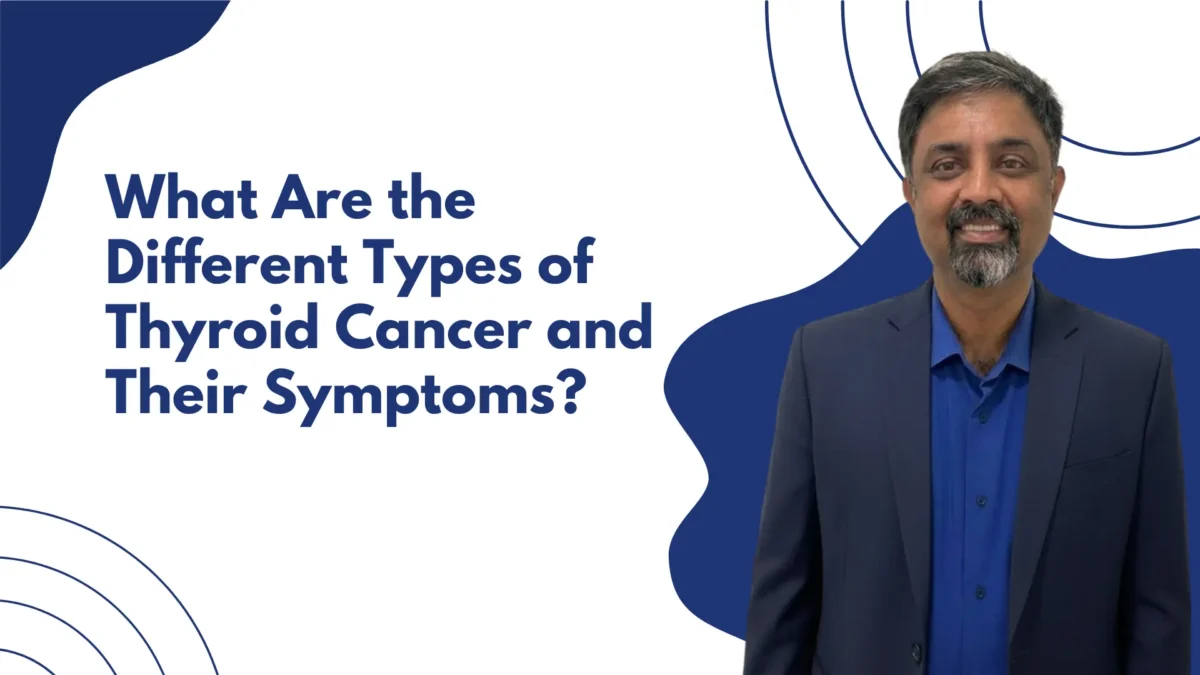
What Are the Four Different Types Of Thyroid Cancer?
Papillary thyroid cancer:
It is the most common form of thyroid cancer. This cancer grows slowly but can spread to lymph nodes on the neck.
Follicular thyroid cancer:
It is the second most common form of thyroid cancer. These also spread slowly in the body and are often found near areas of iodine deficiency. For your information, let us tell you that treating follicular thyroid cancer is the easiest.
Medullary thyroid cancer:
This form of thyroid cancer is not common and is mostly hereditary. But it is more likely to spread to lymph nodes early than other thyroid cancers.
Anaplastic thyroid cancer:
This form of thyroid cancer is the most aggressive, but the good news is that anaplastic thyroid cancer is rare. It grows fast and spreads easily, so it is hazardous.
Thyroid cancer treatment options depend on the type of cancer you have.
Diagnosis of Thyroid Disease | Thyroid Cancer Doctor in Bangalore | Dr. Murali Subramanian
What is the diagnosis of thyroid disease?
Medical science has progressed so much that today there is a cure for all thyroid conditions. You do not need to panic if you have thyroid cancer or thyroid problems. Doctors take special blood tests and physical examinations when diagnosing thyroid diseases. Also, use your medical history.
In most cases, thyroid disorders can be treated with medications, while in some cases, surgery is required. The treatment of your thyroid problem will entirely depend on the specific disease. Contact us for all conditions you may have, including thyroid cancer, hyperthyroidism, or hypothyroidism.
Lastly, we request you raise thyroid awareness among people during January (National Thyroid Awareness Month). Also, participate in the fight to find a cure for thyroid cancer or any form of a thyroid condition.
Thyroid cancer is treatable today, so if you have any concerns or questions about thyroid problems, don’t hesitate to speak to one of our experts. Our specialist doctors will help you find the best treatment for you.
Yes, you heard it right “forgotten cancer” , that is Sarcoma. Read on to gather valuable insights on what is Sarcoma, and how it affects the common and the elderly population?
About Sarcoma
Sarcoma is a type of cancer that is rare, and made up of soft tissue. There are various subtypes, as they emerge from different tissue structures like muscles, nerves, bone, blood, fat, joints, or blood vessels that are the connective tissues in the body. Besides, Sarcoma can also crop up in the bones. Primarily, as these tissues are found everywhere in the body, Sarcoma can be found in any place.
Most commonly, Sarcoma is a cancer found in the arms and legs where most of the connective tissues are present. The disease starts very deep in the body that is not identified until a lump is noticed, and cancer may be difficult to treat at this stage. There are two categories of sarcoma – soft tissue and bone sarcoma. In all probability, Sarcoma reasonably affects children and young adults more than the aged population. Bone and joint cancer are found more in teenagers whereas, soft tissue cancer attacks fifty-five years and above.
All about Sarcoma Cancer | Best Cancer Specialist in Kalyan Nagar- Dr. Murali Subramanian
Specifically, Sarcoma can be grouped as,
Soft tissue sarcoma – they form in cartilage, muscles, fat, nerves, tendons, vessels, and joint muscles.
Ewing sarcoma – they form in bone and soft tissue.
Osteosarcomas – mostly develop in bone, and liposarcomas form in fat.
Rhabdomyosarcomas – develop in muscle.
Potential Reasons
The root cause and the development of sarcomas are unknown. After much evaluation, researchers have come up with some hints that may have a role in affecting sarcomas. While the core reason is unknown, there are some known risk factors.
In some cases, phenoxy acetic acid found in herbicides or chlorophenols increases the risk. Angiosarcoma, a rare blood vessel cancer is found to develop due to exposure to vinyl chloride. High exposure to radiation is also a cause of sarcoma in some populations.
Some inherited diseases are also associated with an increase in soft tissue sarcoma.
Von Recklinghausen’s disease (neurofibromatosis) – is associated with the NF1 gene
Li-Fraumeni syndrome – associated with alterations in the p53 gene
Research shows alterations in genetic conditions have contributed to the development of sarcomas. It can also affect future generations and may be a random event in the family cancer history.
Detection
At substantial times, lumps and bumps found are benign. But, people must be proactive enough to have a consultation to rule out any sarcoma scare. As sarcoma is hard to detect from other types of cancer, they effect the organs where their evidence is underestimated.
A reliable source to determine a malignant, benign, or tumor can be done by a surgical biopsy, where all soft tissues and bone lumps found are taken for biopsy. The procedure involves a special needle used to make an incision and remove a small portion of tumor tissue which is studied under a microscope. If it is positive for cancer, the pathologist assesses the grade and the type of cancer.
Though low-grade sarcomas are cancerous, they are unexpected to proliferate, high-grade sarcomas have a great chance to spread to other parts of the body. The survival rate for five years can be estimated as fifty percent for soft tissue sarcoma, whereas sixty-six percent for bone sarcomas.
Remedy
The treatment for sarcoma depends on the cancer stage, based on the grade of tumor and size, and whether cancer has advanced to the other parts of the body. The main treatment options include,
Surgery – It is the most common treatment where there is a removal of cancer and a safe margin of healthy tissue surrounding it. Most of the tumor is extracted by surgery, but radiation or chemotherapy is given before surgery to shrink the tumor or after surgery to eliminate leftover cancer cells.
Radiation – It involves high-dose x-rays that are used before surgery to shrink the tumor or post-surgery to do away with the remaining cancer cells.
Chemotherapy – Here, anticancer drugs are used along with radiation therapy either before or after surgery. If cancer cells have already made their way to other parts of the body, chemotherapy is done to shrink tumors and reduce the discomfort and pain caused, but doubtful on the disease elimination.
Chemotherapy has been found effective in preventing its spread where the treatment is done intravenously. Doctors and researchers are continually working to identify new, effective treatments and better ways to utilize the current procedure
July is Sarcoma Awareness Month | Best Cancer Specialist in Kalyan Nagar | Dr. Murali Subramanian
Encouraging Awareness for Sarcoma Spread
As Sarcoma is a rare type of cancer, people are still uninformed about the disease unless it has been affected personally. This July, make an attempt to share a message through social media or discuss the underlying conditions with family and friends.
To spread awareness on social media, a tag using #curesarcoma #sarcomaawarenessmonth
Donate in honor of “Sarcoma Awareness Month”
Be a part of the Race to Cure Sarcoma held in the US, made up of a family-oriented 5k walk/run.
Get in touch with curesarcoma.org and related social media channels.
The Sarcoma Awareness Month attempts to underline the extensive challenges faced by those affected by Sarcoma, and renders the necessity for a deeper sarcoma research, therapies, and treatment.
In today’s podcast, Dr. Murali Subramanian – Best Oncologist in Kalyan Nagar is going to discuss about “Prostate Cancer “
Prostate is a small gland and is responsible for the production of the semen. It is located below the bladder. There are several nerves and blood vessels that help in erectile function. They get affected by prostate cancer.
Lung Cancer and Coronavirus - Best Cancer Specialist doctor in Bangalore
Lung Cancer and Coronavirus – Dr Murali Subramanian
For the past 6 to 7 months we all are living in fear. The world-wide Coronavirus pandemic situation has stolen the peace of our normal life. As this virus becomes deadly while attacking the lungs, naturally patients of lung cancer are very much worried and afraid of this virus. However, already lots of myths have been spread related to the connection between COVID-19 and lung cancer. Some of them are logical while rests are just a myth.
No need to say, the research data on the COVID-19 virus is fairly new for a detailed study about the interaction of novel coronavirus and lings cancer, but analyzing the trends of the virus attack, it’s unfortunate that patient with lungs cancer is at the highest risk of the fatality of this virus attack. The risk is almost twice in this case.
Now let’s come to the diagnosis part. While a patient is already suffering from lung cancer, the diagnosis of the coronavirus becomes a beat tricky. The symptoms of coronavirus are almost similar to that of lung cancer. In both cases, the patient experiences:
Fever
Cough
Breathing problem
Inflammation of lungs
Treatments: As usual social distancing is the best way to lower the chances of coronavirus attacks in lung cancer patients. Keeping this measure in the mind we, oncologist have modified the process of regular lungs cancer treatment accordingly.
Nowadays we are focused on
Limiting the number of times for visiting the clinic or hospital.
Avoiding or at least decreasing (when avoiding is impossible) the treatments that weaken the immune system
Using telemedicine visits instead of in-person clinic visits.
However, in the case of immunotherapy treatment, we are still practicing the usual process because it’s not quite sure if the drugs used in such therapies, affect the immune system to fight against the coronavirus or not.
Prevention of complication: If you are undergoing chemotherapy or radiation therapy, you are indeed more exposed to the COVID-19 virus attack. To discuss you’re treatment plan and even the basic to basic side-effect symptoms with your doctor. Don’t ignore any of the symptoms as the common side-effect. Contact the doctor without any delay.
For example, while taking radiation therapy, an inflammation of the lungs is common in the case of some patients. In medical terms, we call it ‘’pneumonitis.’ The bad news it resembles the symptoms of pneumonia. So don’t wait for severe fever, chest pain, or breathing difficulty. Discuss it with your doctor instantly.
However, in the case of the COVID-19 attack, we can only suggest ‘prevention is better than cure.’ The reason is till now we are lacking any proven anti-viral treatment against the COVID-19. So, the maximum we can do is to take the measures that help our body to fight back against this virus. As I already said, a lung cancer patient going through radial treatment lacks immunity power so there remains the only way to protect yourself by avoiding the contact of an infected person. Besides, follow the COVID-19 preventive measure more strictly.
Every time you cough, sneeze, or blow your nose, wash your hand with soap for 20 seconds or use a hand sanitizer that contains at least 60 percent alcohol.
Always wear a mask in public places. Even you can use a homemade mask but be sure that you are not removing your mask while outside. And yes, don’t touch the outside of the mask even after coming back home.
Main social distancing, even of wear a mask. If you feel comfortable it’s better to use a face shield over the mask.
If you have a plan of surgery, discuss it with your doctor if you can be delayed.
Try to do routine breathing exercises as per your doctor’s instruction to maintain your lung health and reduce the probability of the clinic visit.
Hope this session has helped you out to understand the link between COVID-19 and lung cancer. Although we can’t prevent the infection in extreme cases, at least we can try to protect your selves. So stay home, stay safe, and hope for the best. It’s time to bid goodbye but doesn’t hesitate to write to me if you have further questions.
FAQ on lung cancer - Best Lung Cancer Doctor in Bangalore
Best Lung Cancer Doctor in Bangalore | Dr Murali Subramanian
Cancer has become the evilest word for this world. In the last few years, the rate of lung cancer is on a rapid hike. Repeated attacks of cough and cold, mild chest pain are very common but these might be symptoms of lung cancer also.
1. What are the risk factors of lung cancer?
We all know both first-hand and second-hand smoking and the use of tobacco is the most identified risk. Apart from this, you should be aware of
Family history.
Smoking
Exposure rate to a cancer-causing agent like air pollution, arsenic, and radioactive elements (such as radon).
Some of the dietary supplements like beta carotene.
2. What are the most common symptoms?
Cough staying for a long time and getting worse with time is the foremost symptom of lung cancer. However as the cancer cell approach the advance stage you might experience continuous chest pain, breathing problem, blood with cough, repeated attack of pneumonia or bronchitis, swelling of neck and face, and weight and appetite loss.
3. Do lung tumors always indicate cancer?
Non-cancerous lung tumors also exist but unfortunately, they are very rare. Moreover, before surgery, it’s quite hard to identify if the tumor is cancerous or not. So, in most of the case, we treat the non-cancerous tumors in the same way as of the cancerous one.
4. Do large doses of antioxidants prevent lung cancer?
Nowadays, before consulting a doctor, most of us keep searching the internet if we experience any unusual health symptoms. There has been a myth those antioxidants like vitamin E lowers the risk of lung cancer.
However, the fact is a bit different. At present, no medically proven concept indicates the lowering of lung cancer risk with the help of vitamin E, rather ongoing studies reveal that few antioxidants, like vitamin-A, beta-carotene foster the risk, mainly in the case of smokers.
5. Do death is the destiny of lungs cancer patients?
In, 2020, the answer is ‘no.’ The treatments like, radiation therapy, immune therapy, surgery targeted therapy, and chemotherapy are now too advanced. These can now completely cure cancer in some cases. For the rest of the cases, patients can live significantly longer with this disease.
6. Does a negative chest X-ray confirm that I don’t have lung cancer?
Unfortunately ‘no’. The tumors might appear as just shows behind the ribs, which is hard to detect.
7. How many types of lung cancer are there?
Two main types are there.
Non-small cell
Small-cell
Non-small cell lung cancer is the most common one. The growth and spread of this type of cancer are much slower than those of the other type. Non-small cell has three subtypes.
The first one is adenocarcinoma. In most cases, women and non-smokers get attacked by this. There remain no symptoms at the earlier stage and spread at the slowest rate.
The second one is squamous cell carcinoma. This type is very common in smokers and starts showing the signs at an earlier stage.
The third one is ‘large-cell carcinoma.’ This type is rarely identified and shows the fastest growth. It spread to distant body parts.
8. Can lung cancer be prevented?
Sorry, but the answer is ‘no.’ Yet, you can lower the risks by avoiding the mentioned risk factor. Early detection always offers a better chance to fully recover but as discussed, in the most common type of lung cancer, there remain almost no signs.